


Unfortunately, this artwork cannot be added to the room view.


The Art of Innovation
The appeal of digital art goes far beyond futuristic aesthetics. For collectors, part of the fascination lies in how technology transforms the creative process. How does an algorithm become an artistic tool? How can code give rise to a distinctive visual language?


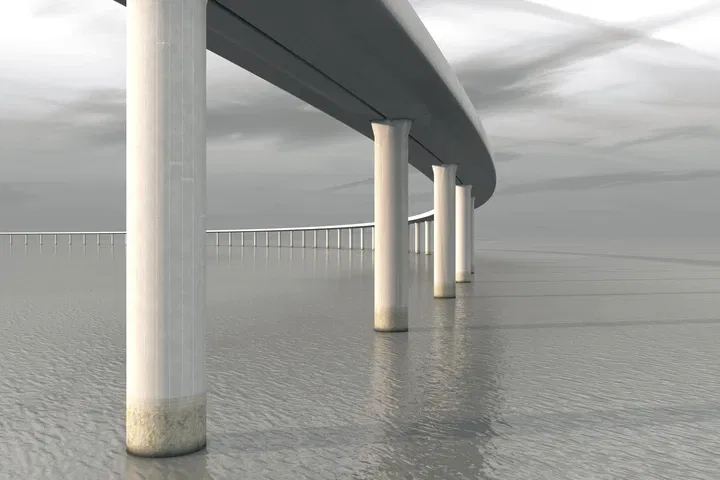



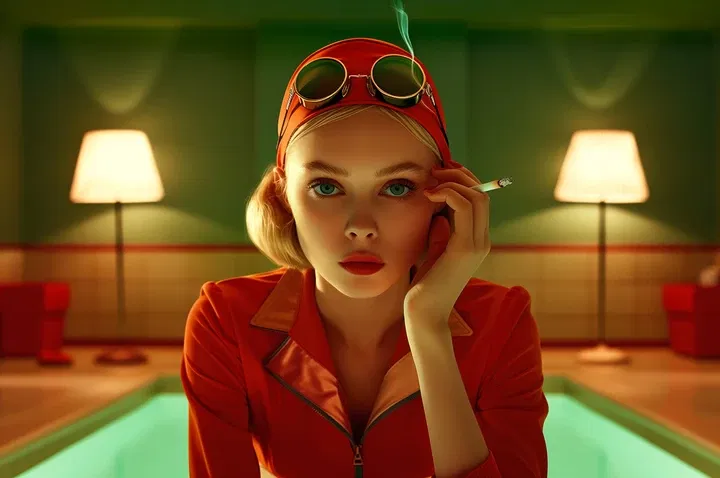
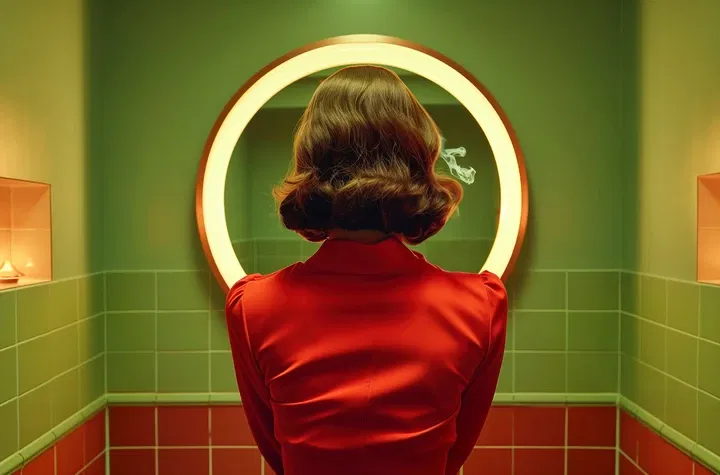
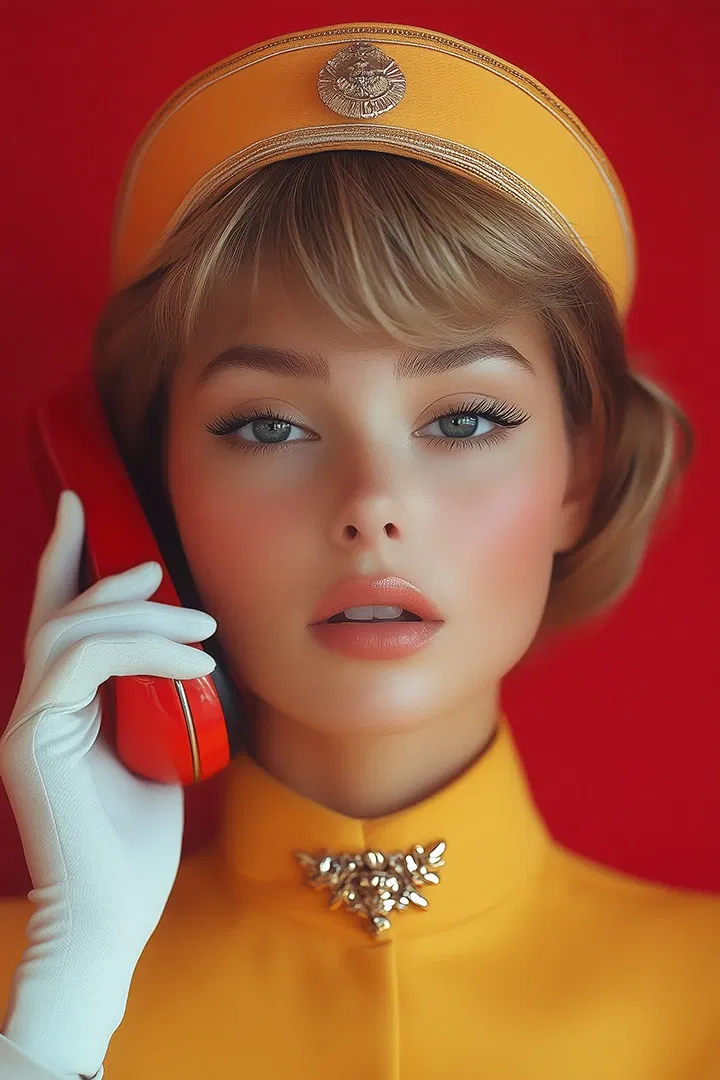
Tate in London describes digital art as “art made or presented using digital technology”. Almost everything is digitally influenced today – here we mean works that could not exist without digital software or hardware. Some are created entirely on screen, like the works of Massimo Colonna or Guachinarte. Others start from source material that has been fundamentally transformed digitally, as with Carol Muthiga-Oyekunle or Robert Jahns.
Digital art is evolving quickly, and AI art is one of its most recent forms. LUMAS follows this development closely, presenting established and emerging artists who explore the possibilities of digital tools. What counts as digital art today may look very different tomorrow.
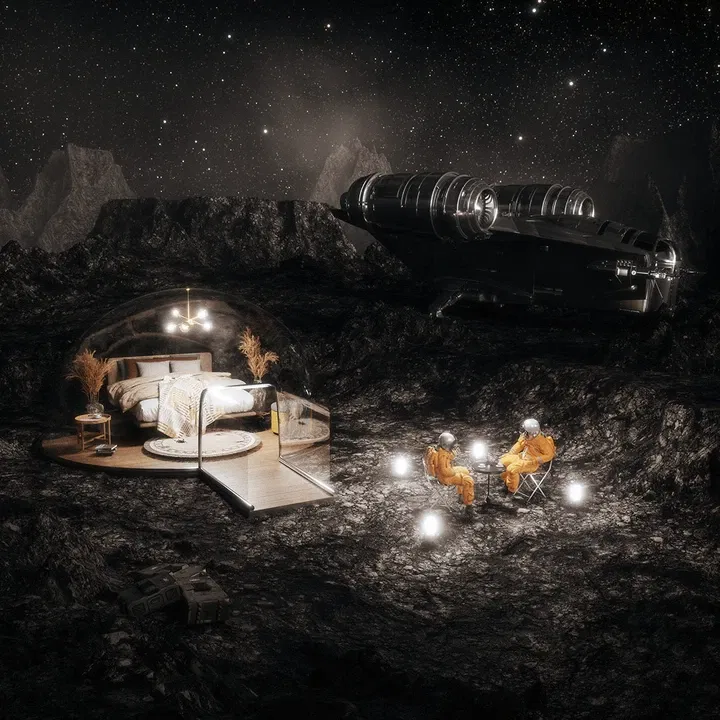
The digital works at LUMAS include the 3D pieces by Javier Soler Esplugues. In his series Future Holidays, he takes up the age-old dream of travelling to distant planets: two astronauts in NASA’s Orion space suit spend their holiday in space. Using digital rendering, Esplugues tests the limits of reality and takes us on a journey into utopia.
Future Holidays plays with our ideas of faraway places – photogenic and with a quiet sense of irony. What we see goes beyond any technology available today. For now, we travel through space and time only in our imagination, sipping coffee on the balcony of fantasy. A pale blue moon hangs above the planetary idyll. Only a second look reveals that it is Earth.
Esplugues came to art through a degree in economics. The possibilities of digital imaging fascinated him so much that he went on to focus on them entirely, teaching himself 3D techniques. Today he works in image and film, using 3D techniques to turn his ideas into visual stories.
Beyond 3D art and AI, digital art takes many other forms: digital sculpture, animation, lenticular art and digital photography. Techniques such as photo manipulation, algorithmic and generative art add to the range – disciplines worth following for any collector.
Where digital art will go next remains open. You can follow its development here – and our newsletter keeps you up to date on new works and artists.
The methods vary widely: from image editing software such as Adobe Photoshop to algorithms and AI tools that generate images entirely virtually. Tablets, scanners or 3D printers then carry the ideas into the physical world.
Many artists combine several programs, tools and devices. Which ones they use depends on whether they are creating a painting, an animation, a sculpture, a photograph or a drawing.
Yes – with ambitions of its own. Creating a digital work with a distinctive signature takes artistic skill as well as command of several technologies and programs. AI art, too, depends on the person who writes the prompts, selects the results and refines them.
Digital art pushes the boundaries between creativity and technology and is shaping contemporary art more and more. With abstraction, it shares a freedom from fixed forms and genres. At LUMAS, you can discover digital art as limited editions in gallery-grade quality.
