Sold Out
Unfortunately, this artwork cannot be added to the room view.


Damien Hirst is a global phenomenon. With groundbreaking approaches and innovative techniques, the visionary conceptual artist and painter has made a name for himself worldwide. Today, his work marks… Read more
Bio Exhibitions
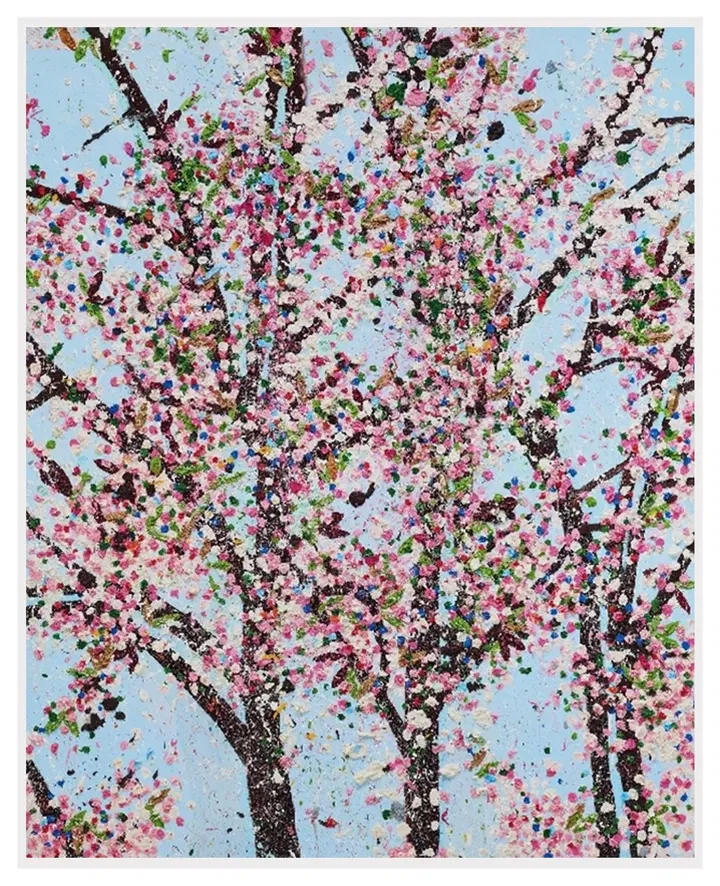
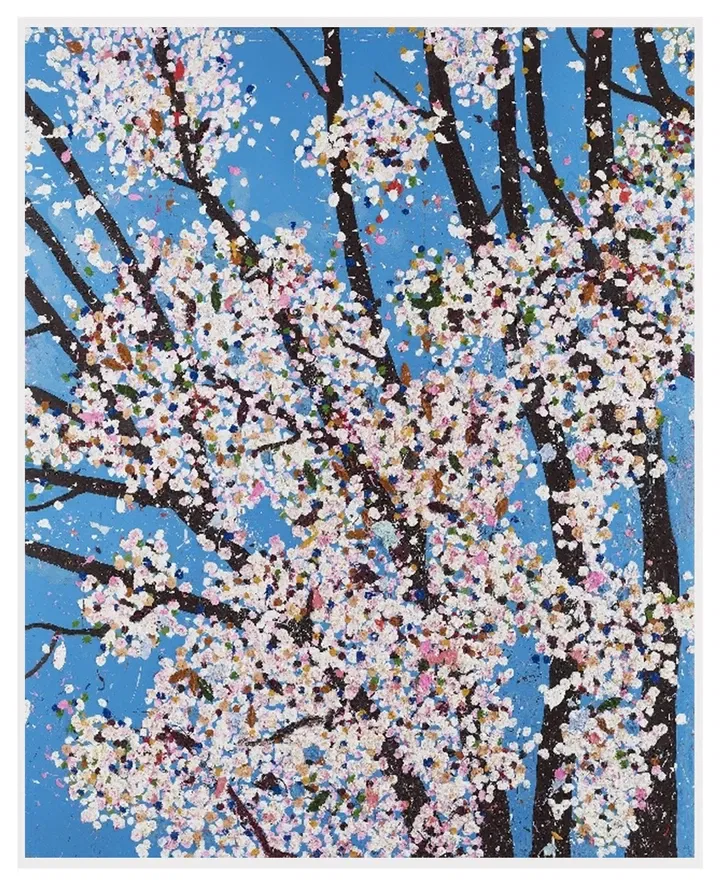
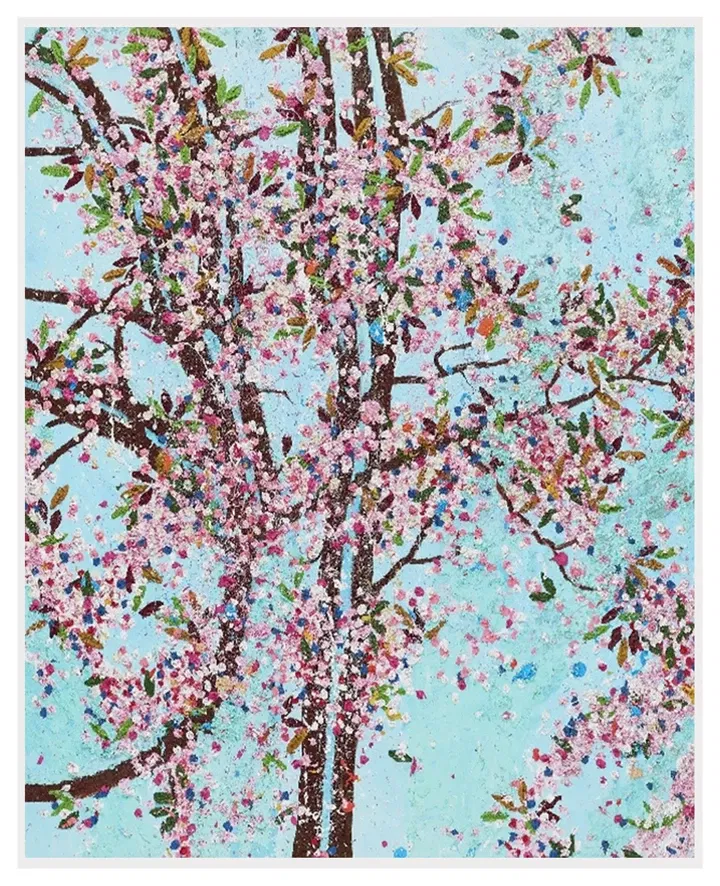
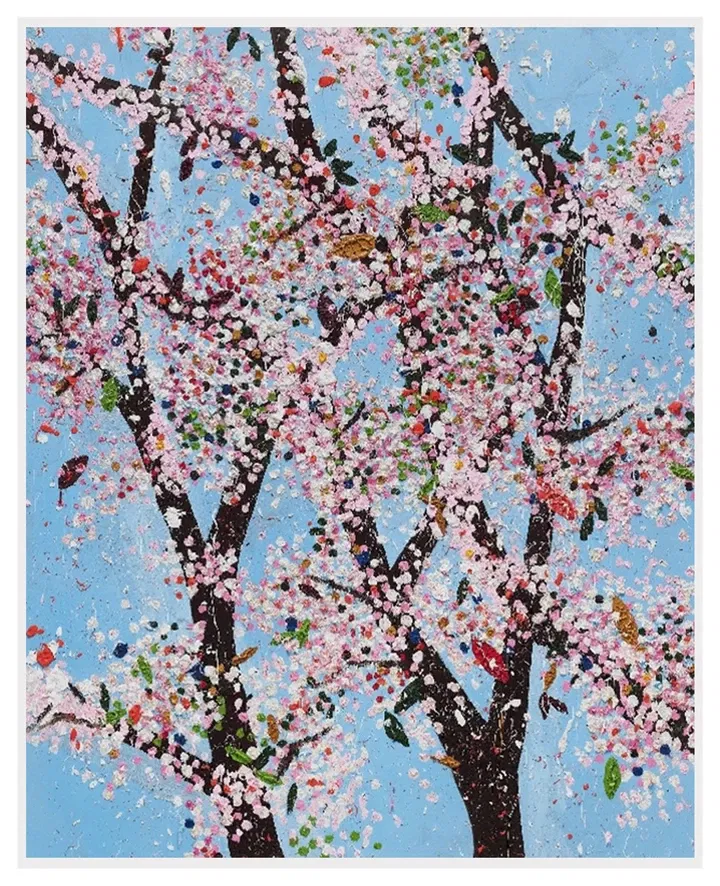
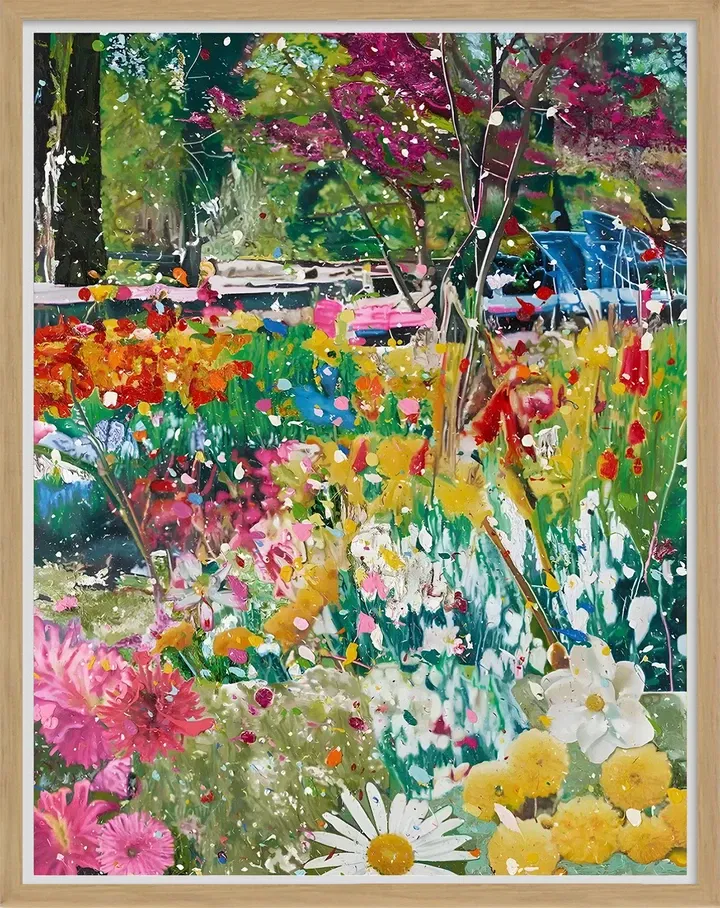
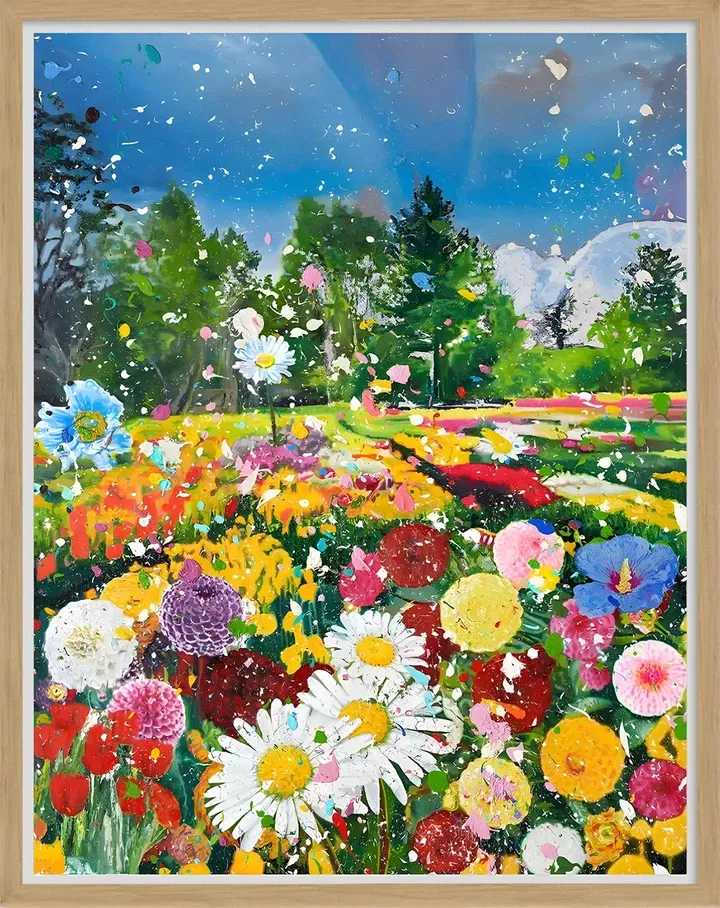
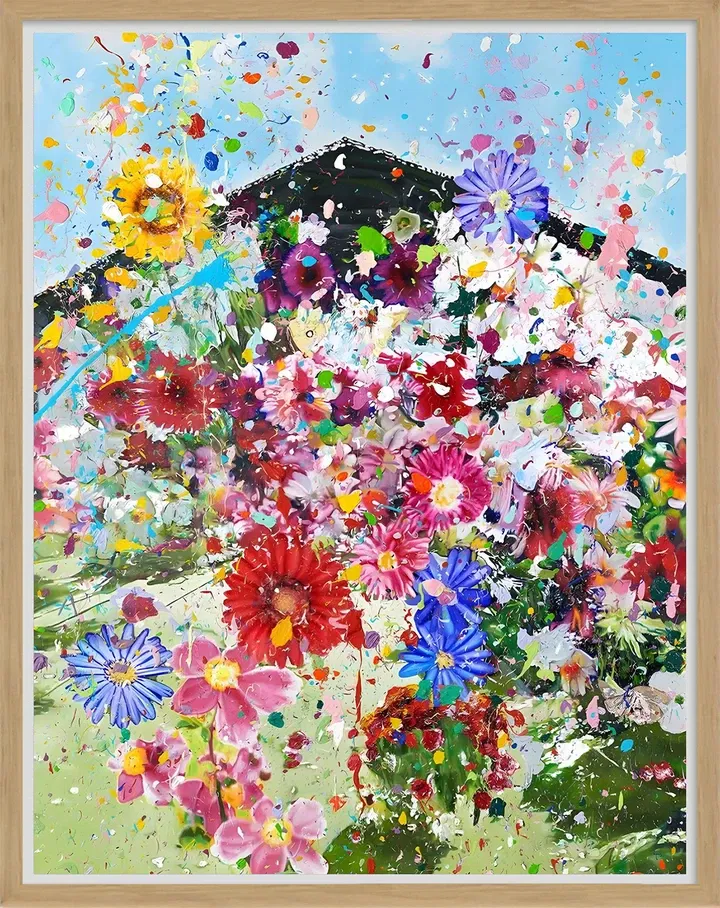
Damien Hirst is a global phenomenon. With groundbreaking approaches and innovative techniques, the visionary conceptual artist and painter has made a name for himself worldwide. Today, his work marks a milestone in contemporary art.
The Secrets
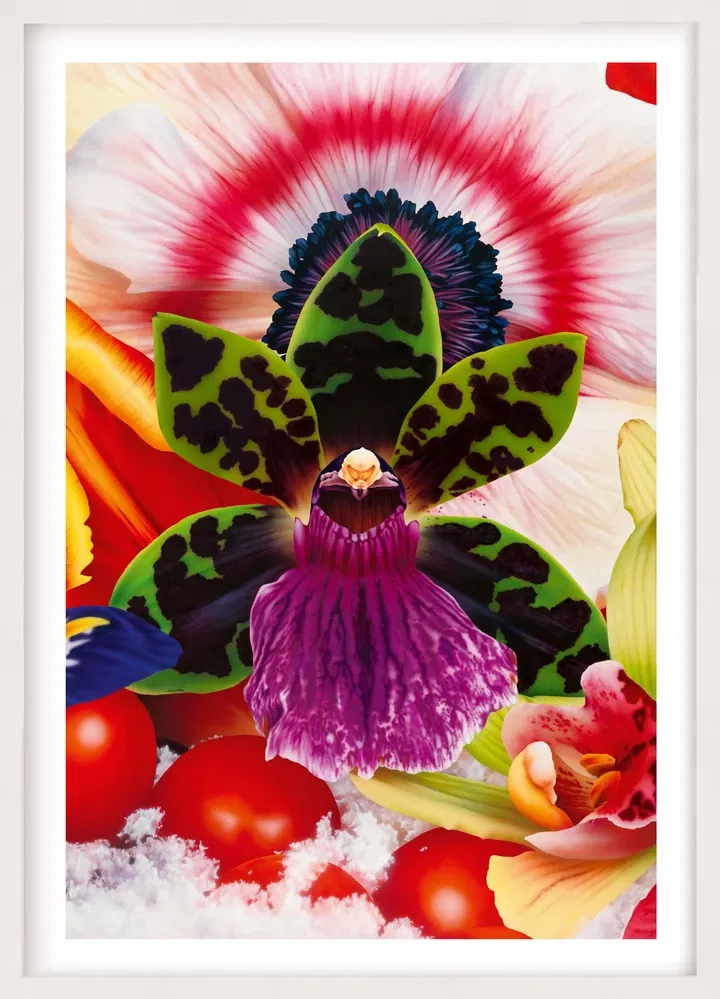
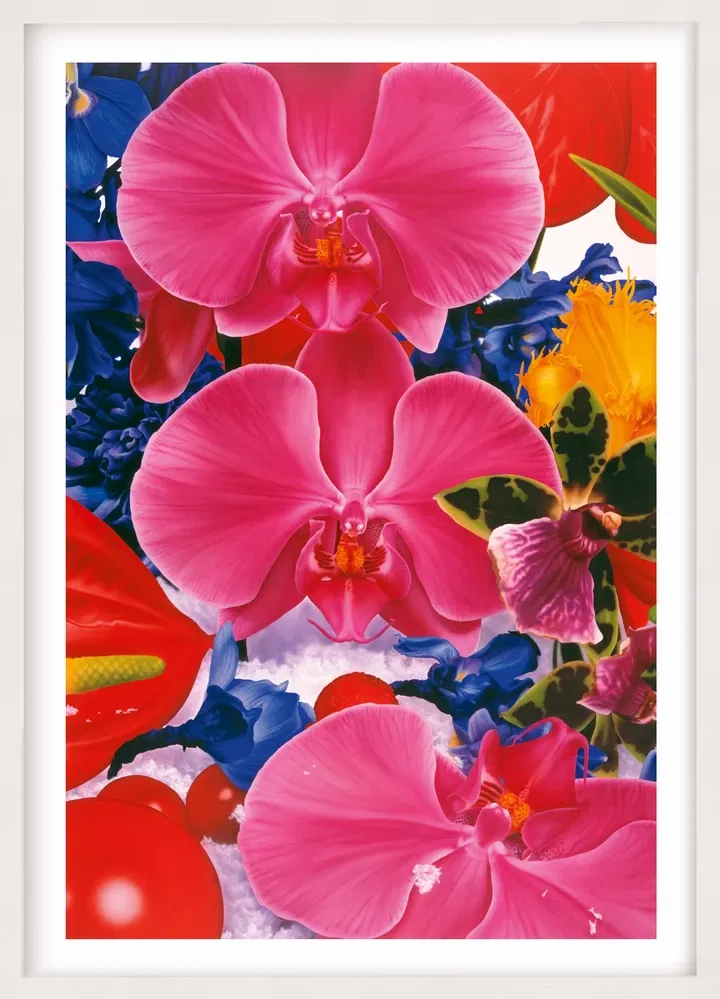
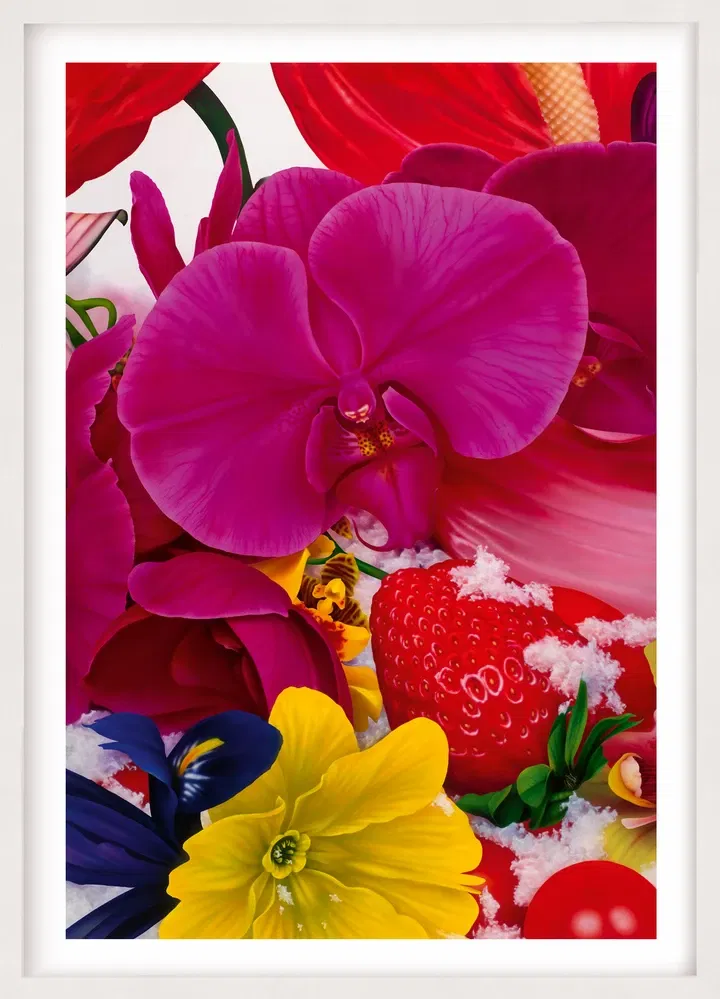
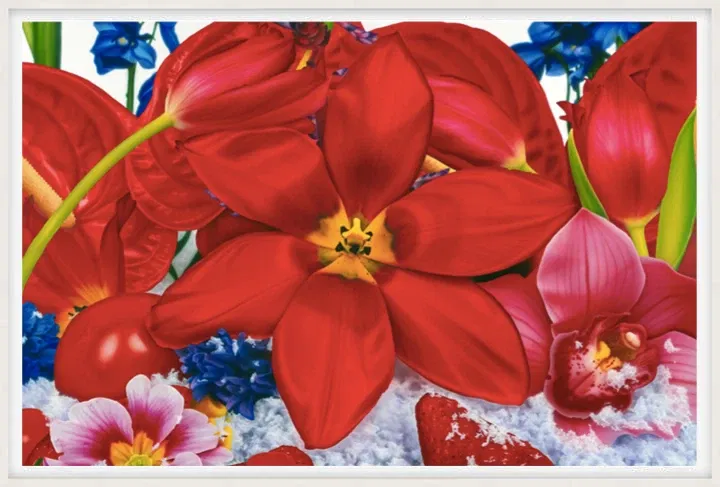
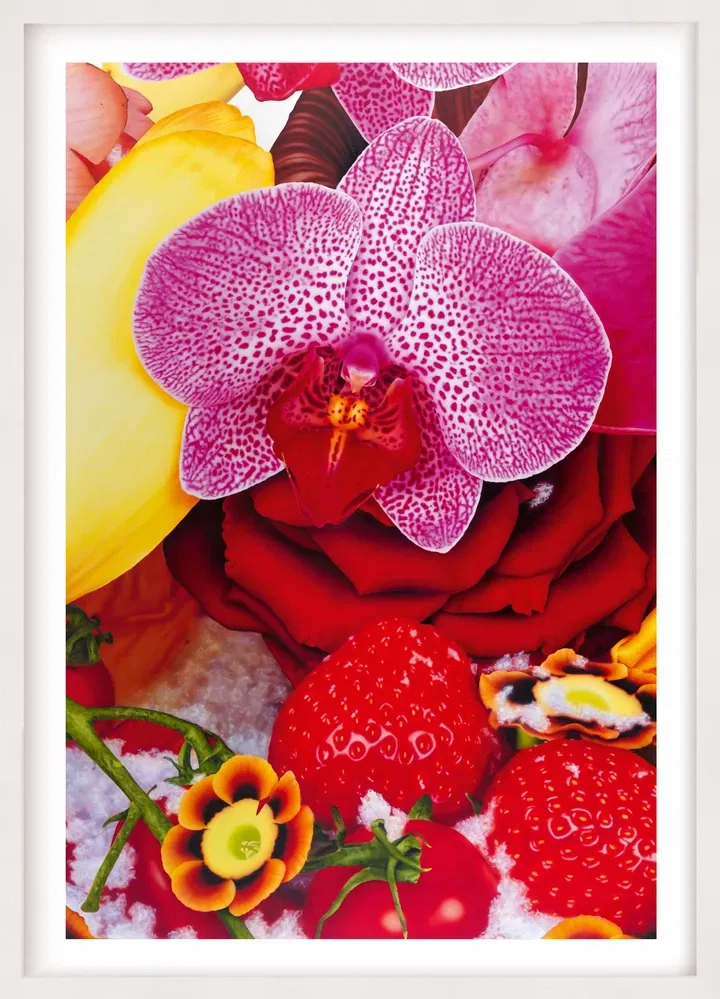
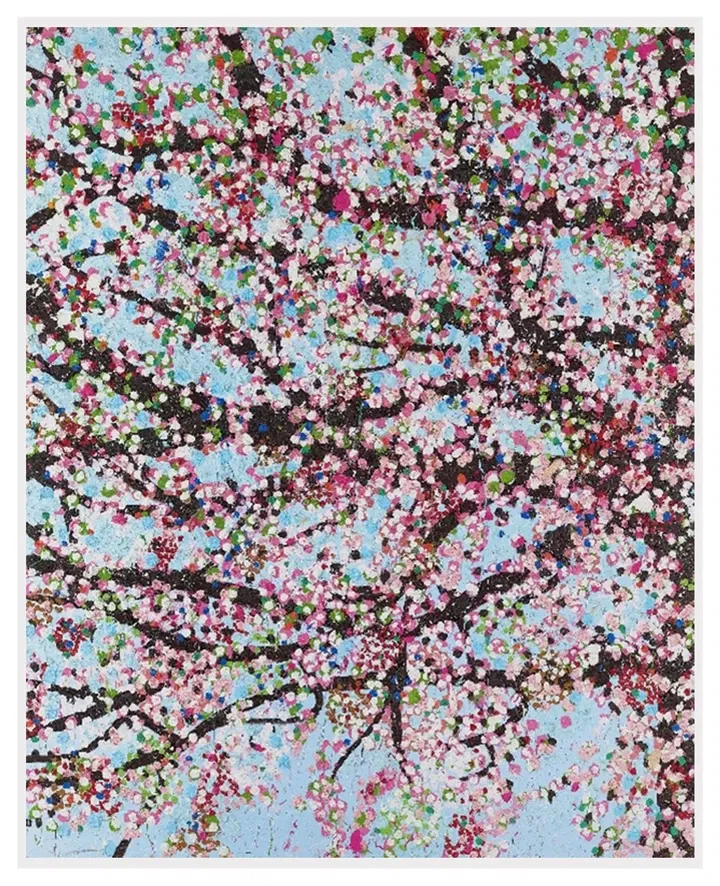
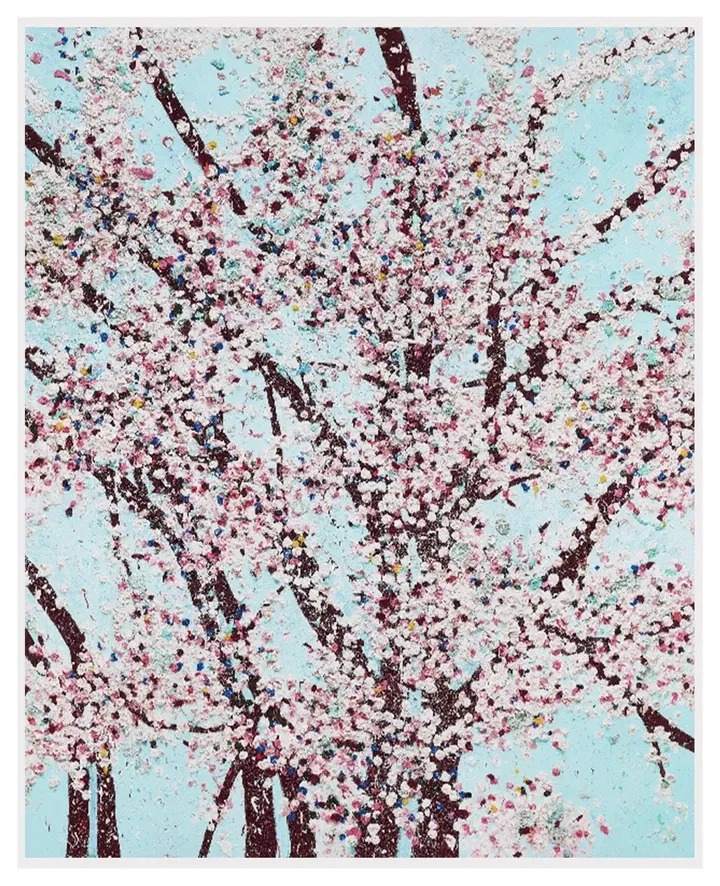
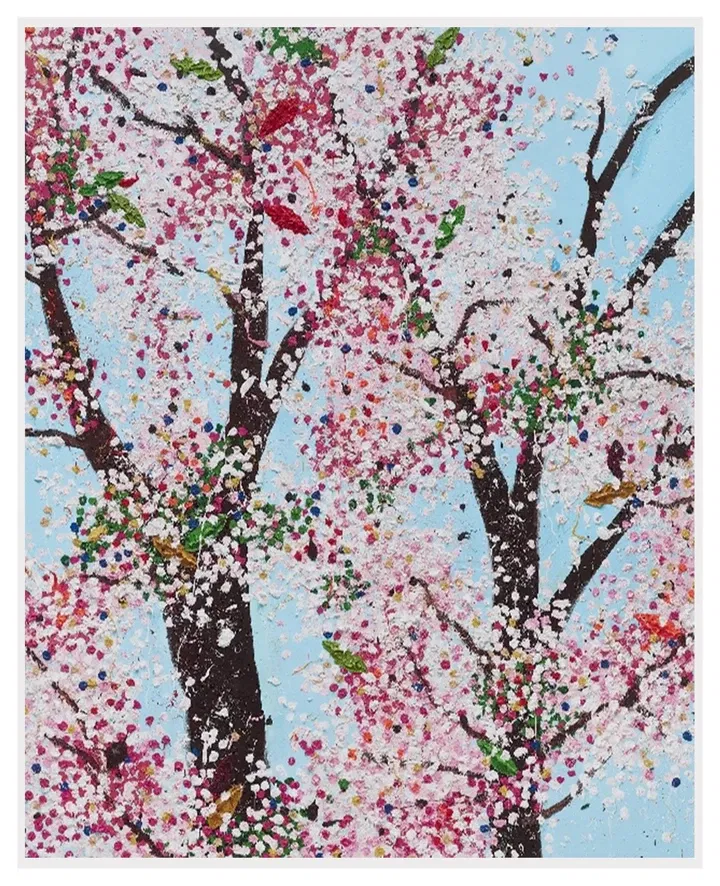
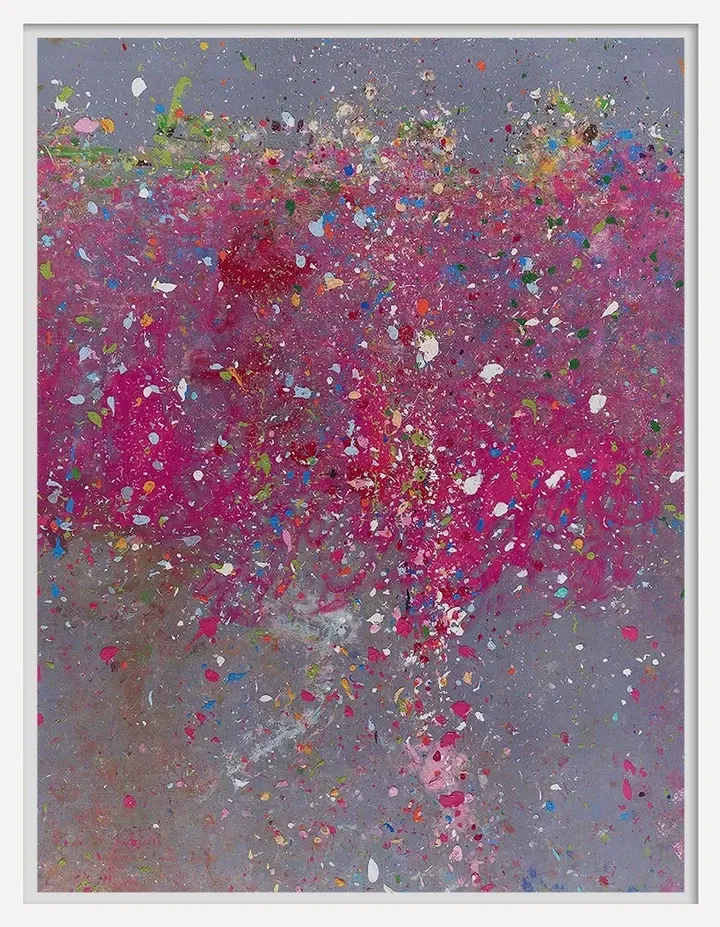
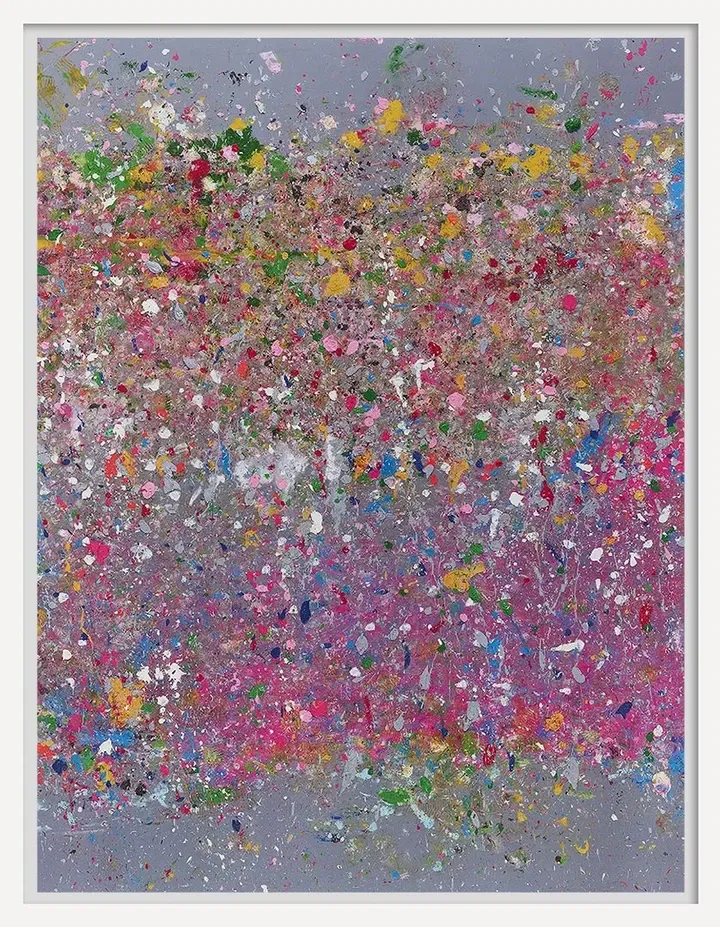
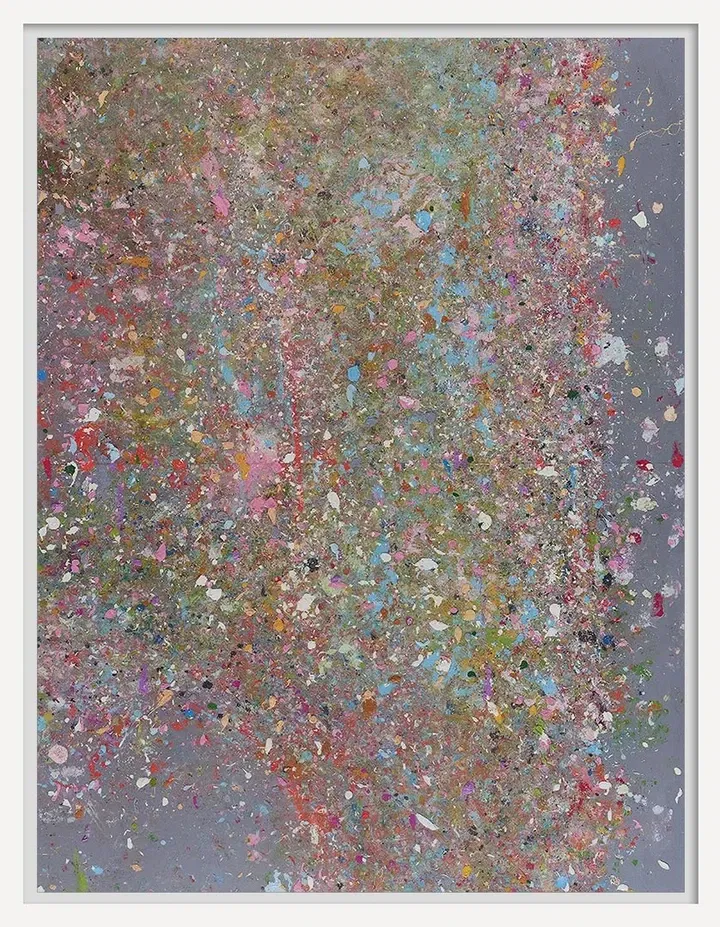
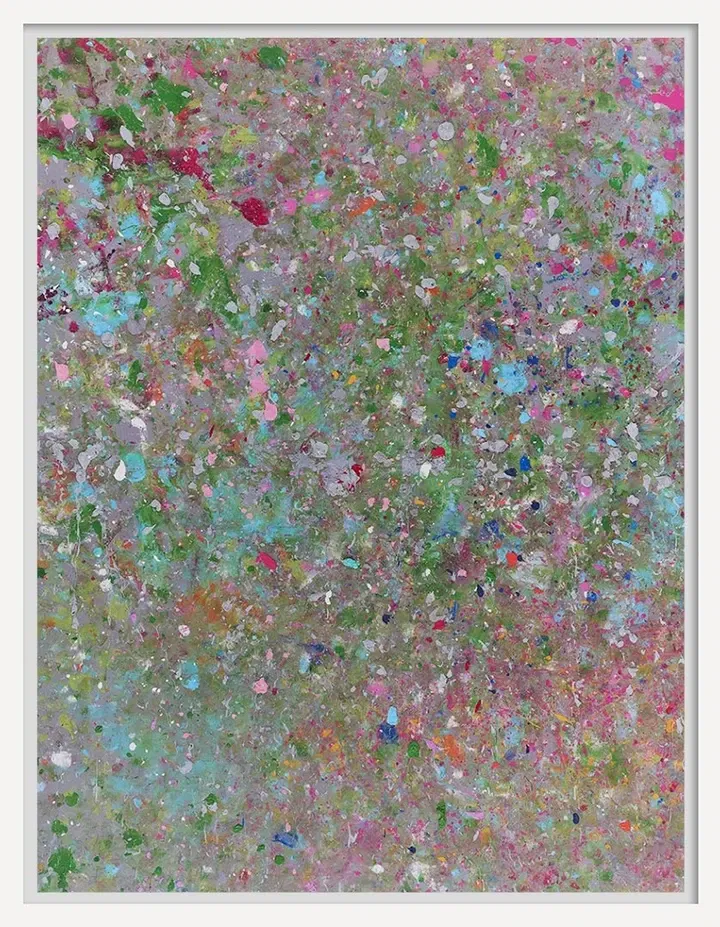
Drawing inspiration from his 2023 series The Secret Garden Paintings, Damien Hirst unveils the untamed beauty of nature in The Secrets. The series unfolds in a style infused with the essence of blooming landscapes—nuanced yet unrestrained, graceful yet overwhelming, delicate yet opulent it invites viewers to immerse themselves in vibrant flower meadows. With impressionistic and pointillistic strokes, The Secrets reflects the versatility of Hirst’s work, balancing realism and abstraction.
Through the symbol of the flower, Hirst reflects on the transience and impermanence of life, offering a vivid reminder to cherish the fleeting beauty of the present moment. In The Secrets, the flower’s elegance finds its ultimate expression: not just one, but countless species of flowers bear Hirst’s unmistakable, expressive signature. A symphony of colors and delicate strokes converge into a visual language that captures the surreal splendor of flourishing nature.
A call to explore enchanting realms where beauty unfolds and mysteries endure.
Where the Land Meets the Sea
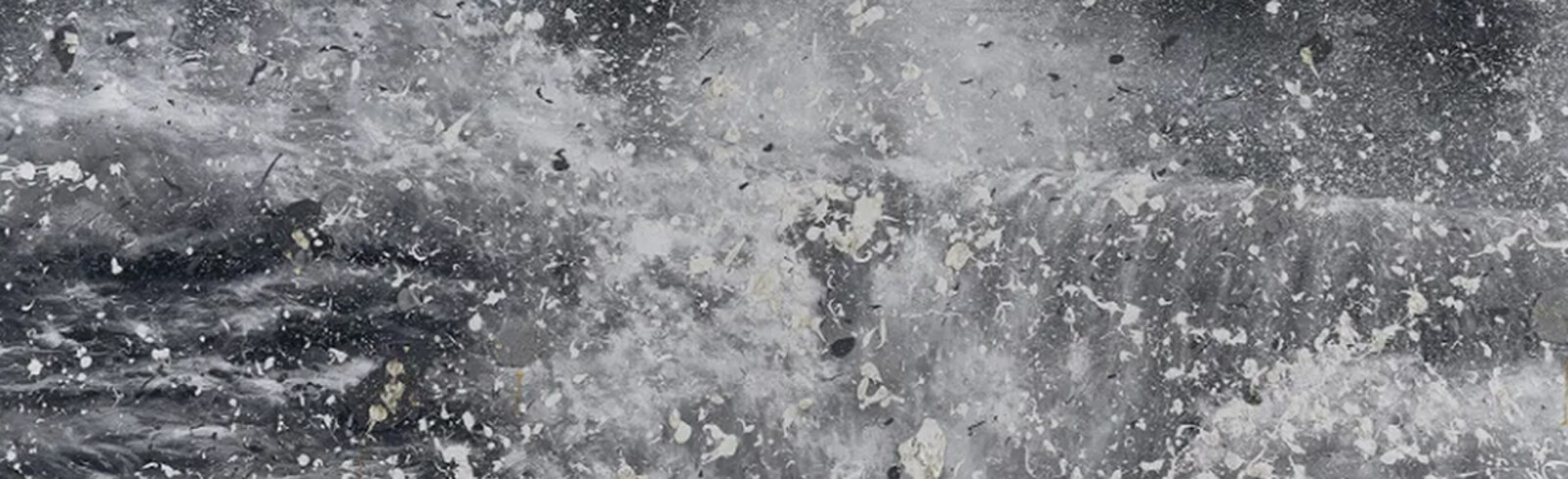
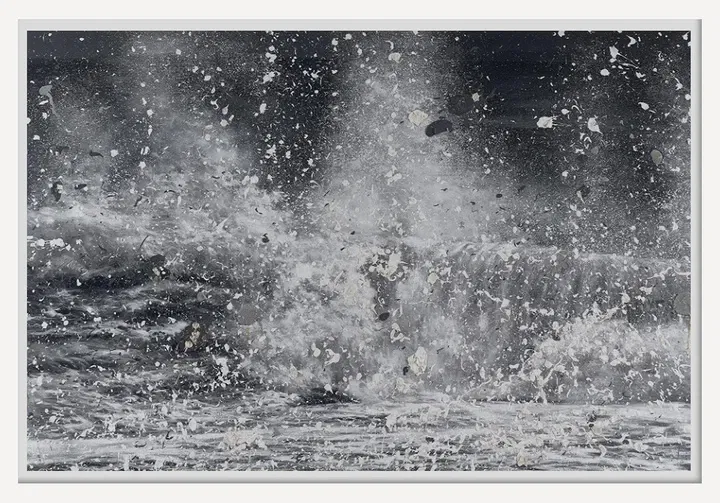
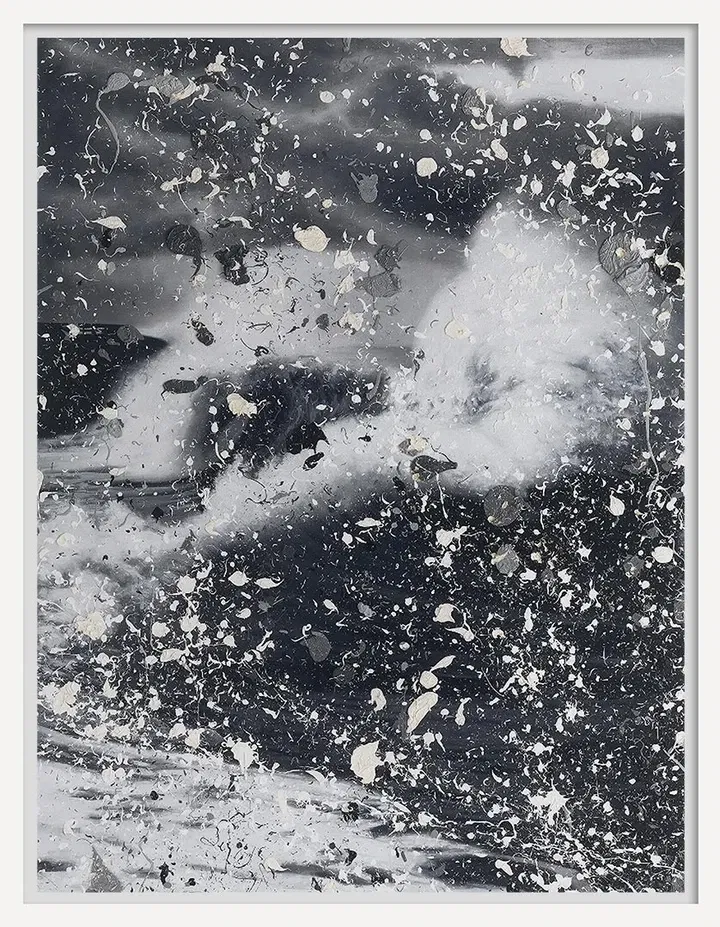
Damien Hirst is globally known for creating massive waves. In his new series ‘Where the Land Meets the Sea’, they literally break in the harsh wind along the British shore: The series is a collection of abstract action paintings, each uniquely capturing the untamed nature of the Atlantic Ocean and the essence of coastal life, a sentiment the artist has carried within him since his childhood beach walks. The process of creation, as masterful as the works themselves, charges the pieces with a vibrant energy that is unleashed with every viewing. It all began with canvases that lay on the floor of Hirst's studio while he was creating his internationally acclaimed ‘Cherry Blossom’ series. The incomparable dedication for which the exceptional artist is famous for has literally stained: The splashes of paint that spilled onto the surrounding canvases during the passionate process became the basis for his latest masterpiece. The gray background of the canvas, which reminded the British artist of the sky over the turbulent sea, is either contrasted by radiant colors or intensified by striking black and white tones. Inspired by Robert Motherwell’s expressionist ‘Beside the Sea’ paintings, Hirst engages in action painting between photorealism and abstraction, resulting in breathtakingly dynamic works containing traces of the artist's biography, pure passion and the power of the Atlantic.
The Beautiful paintings
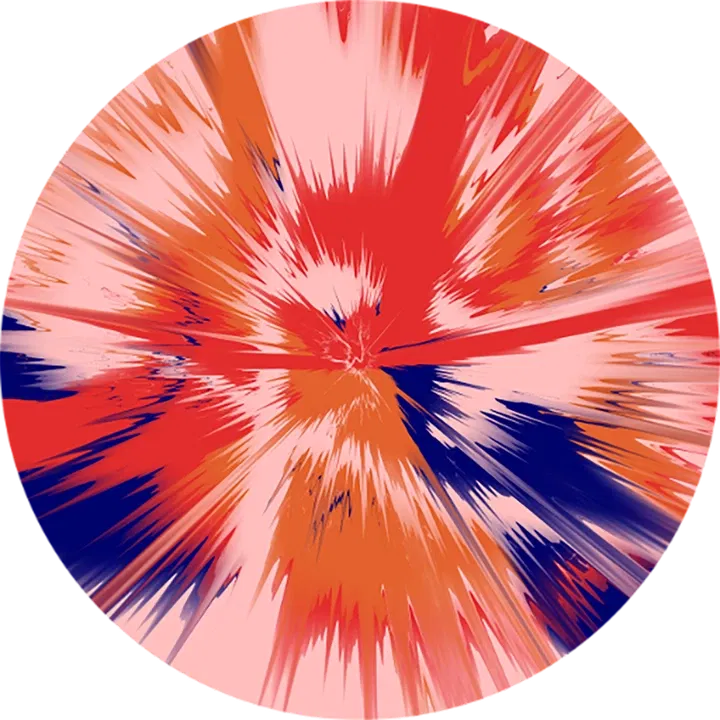
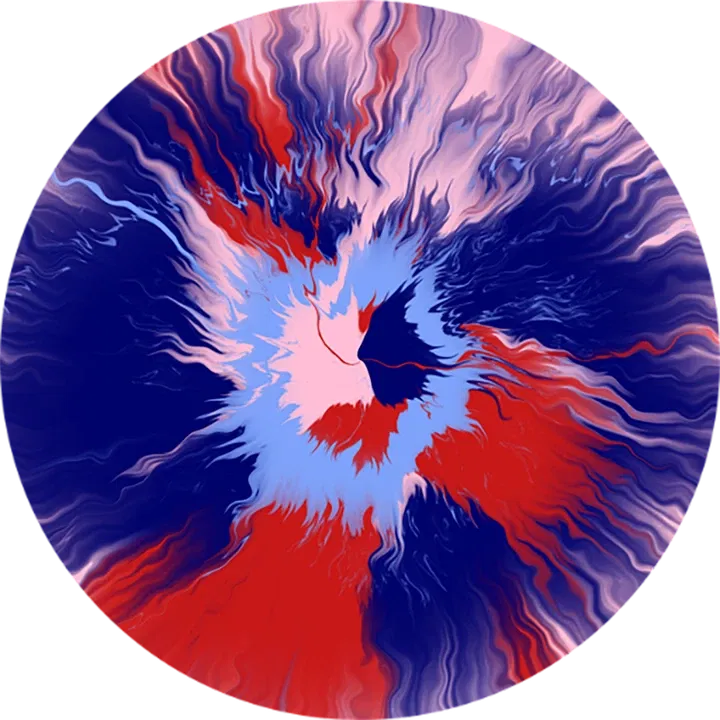
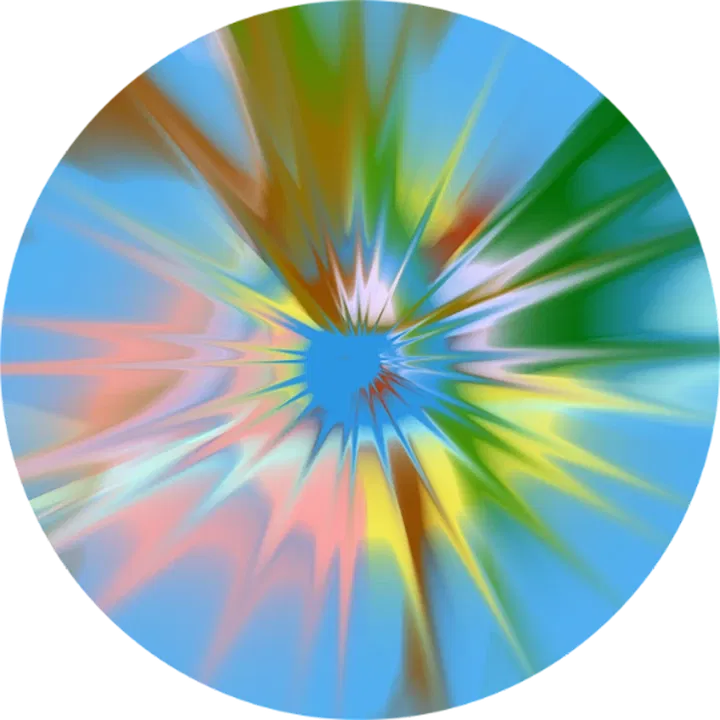
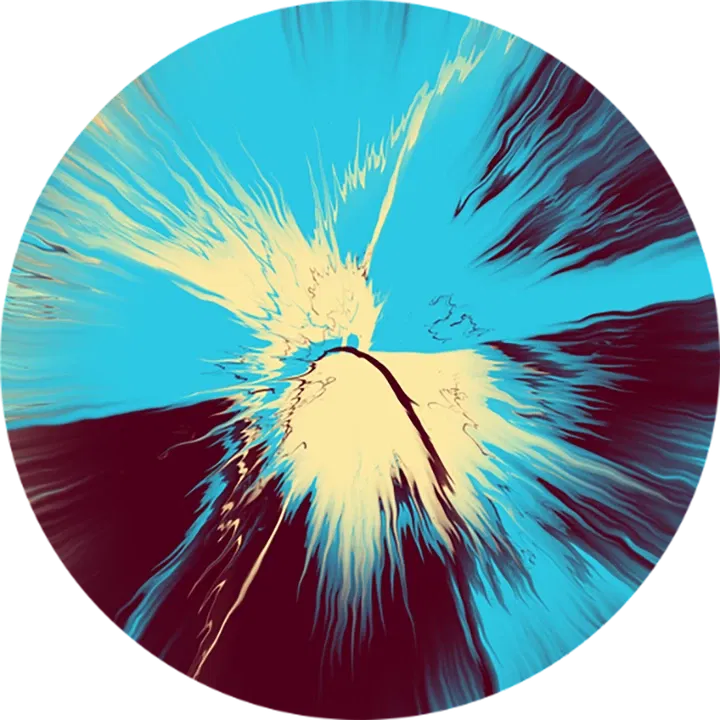
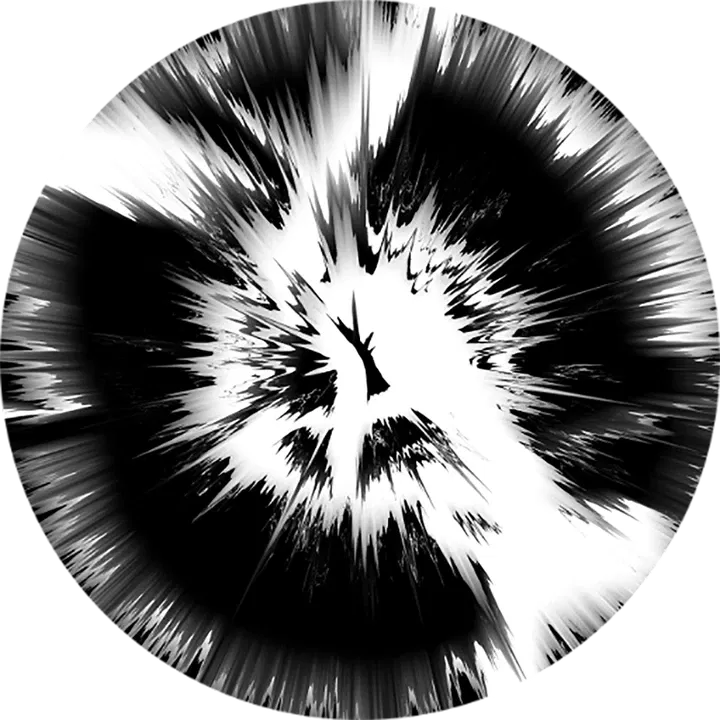
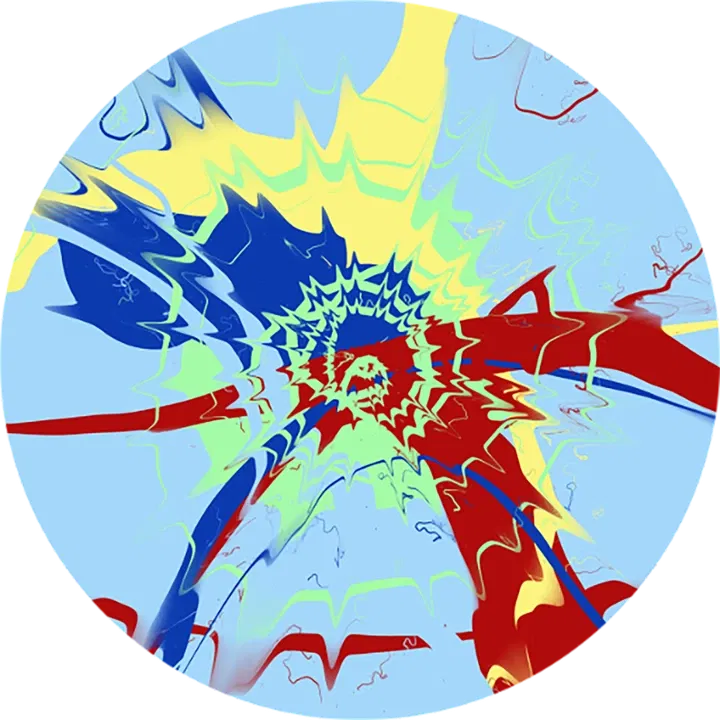
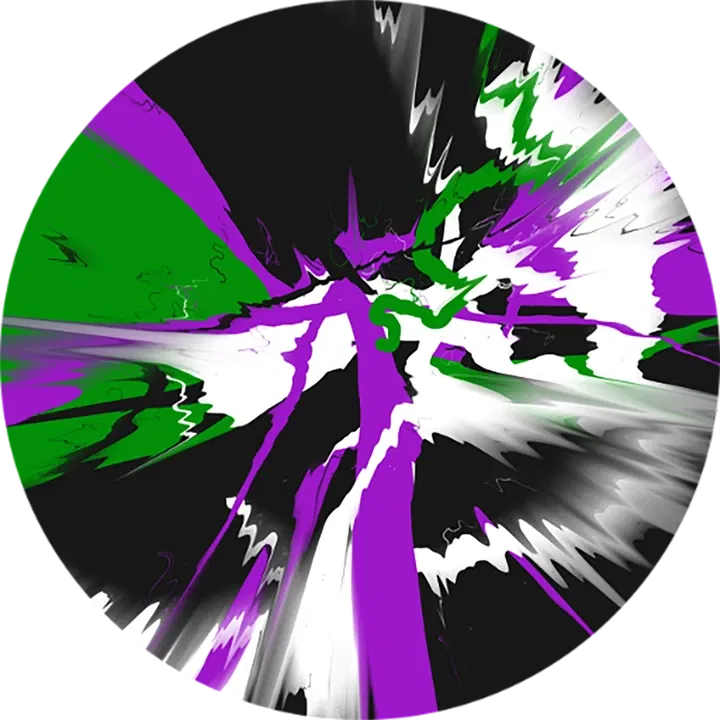
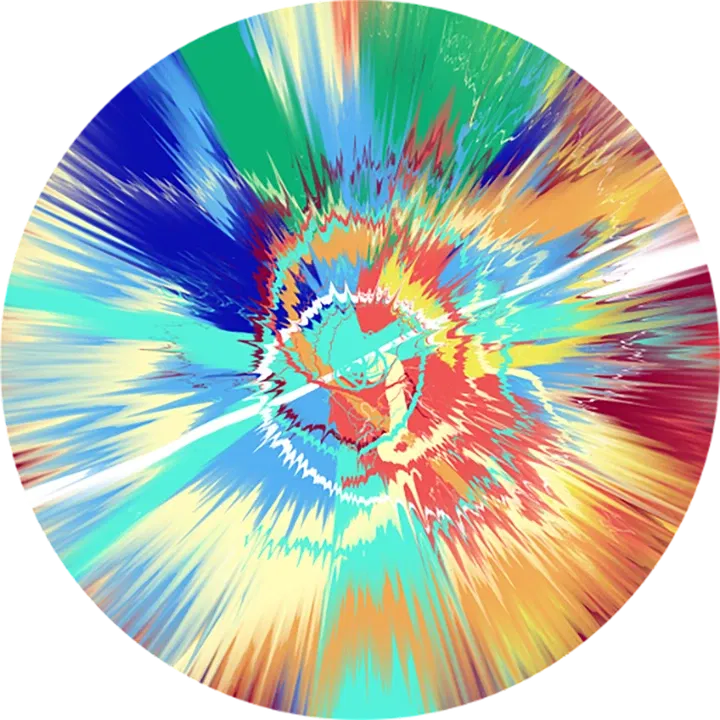
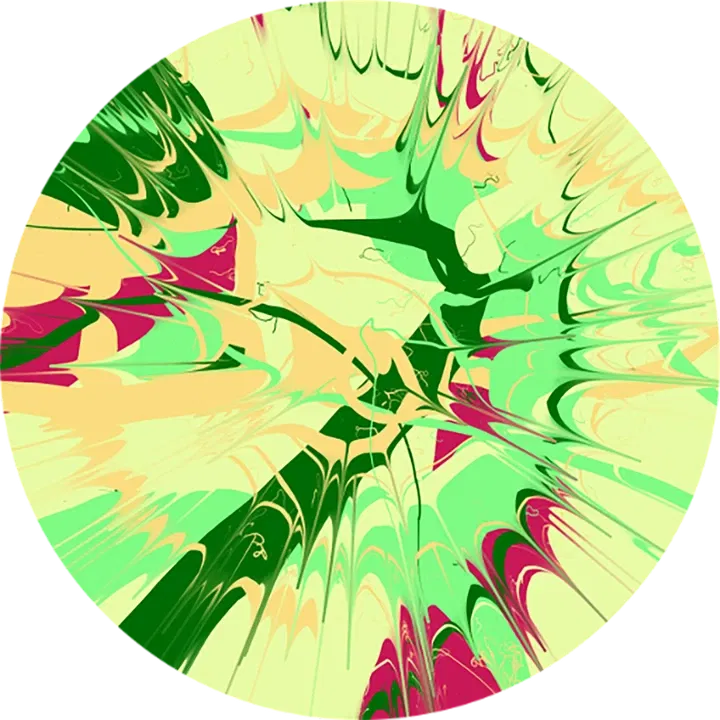
Damien Hirst's Beautiful Paintings are the modern sequel of his acclaimed Spin Paintings: the production of the Beautiful Paintings is as dynamic as the energetic creation of the Spin Paintings, in which splashes of paint meet round, rotating canvases. Using special programs tailored to his Spin Paintings series, the artist's creative vision of inventing something completely unique reaches a new peak: the element of randomness, which is essential to the moving creations of the Spin Paintings, also determines the creation of the Beautiful Paintings and results in incomparable masterpieces.
Damien Hirst's typically conceptual approach has enabled art collectors to create spin-offs of his Spin Paintings. The Beautiful Paintings are based on unique combinations of colors and shapes using a palette of more than 250 hues and over 20 styles from the original series. In the tradition of the Spin Paintings, these works are also mounted on round stretcher frames. On the one hand, this ensures that the artworks hardly deviate from the original series whose works are worth several hundred thousand euros. On the other hand, they continue to realize Hirst's intention of creating completely unique pieces.
His innovative approach of blending creativity and randomness culminates in explosive colors:
Not only do his pieces thus have a magical appeal, but they also work like magic by turning collectors into artists and provoking broad fascination: In viewers around the globe and in the artist himself.
The Empresses
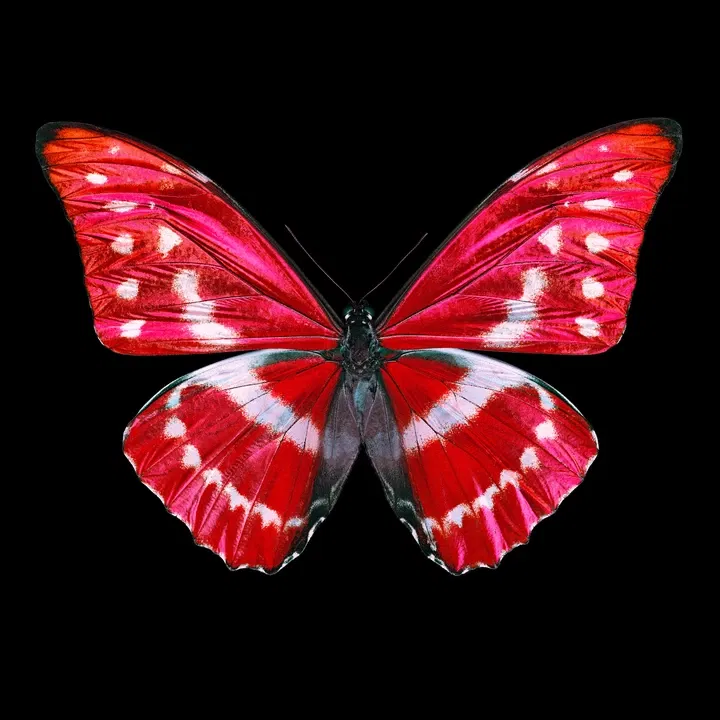
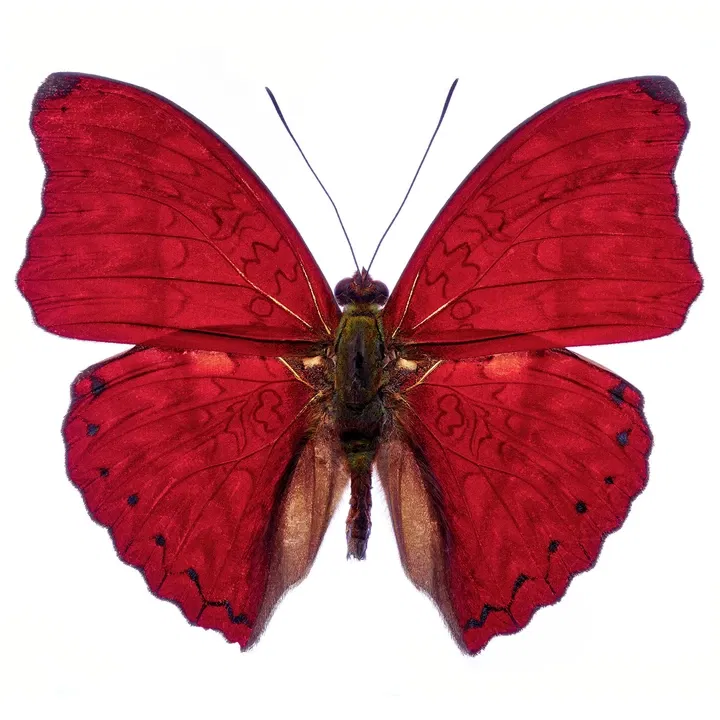
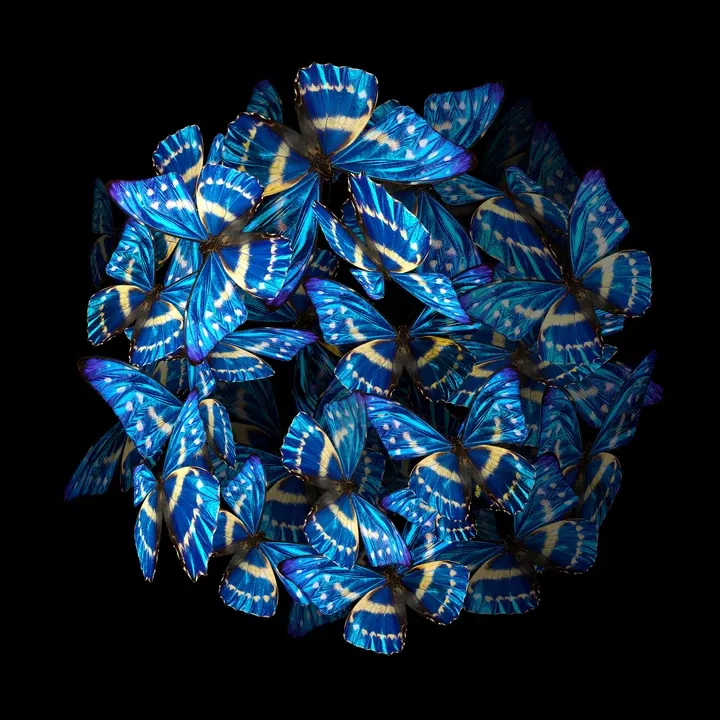
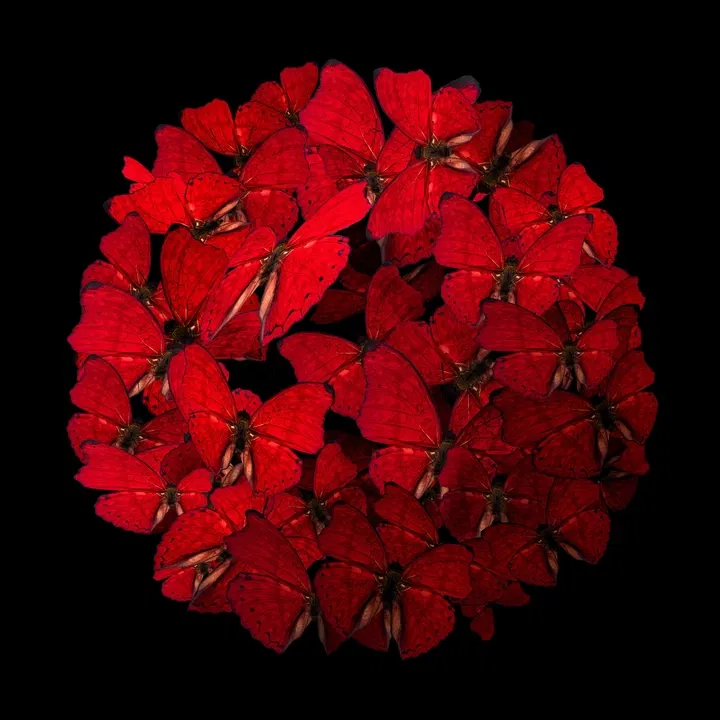
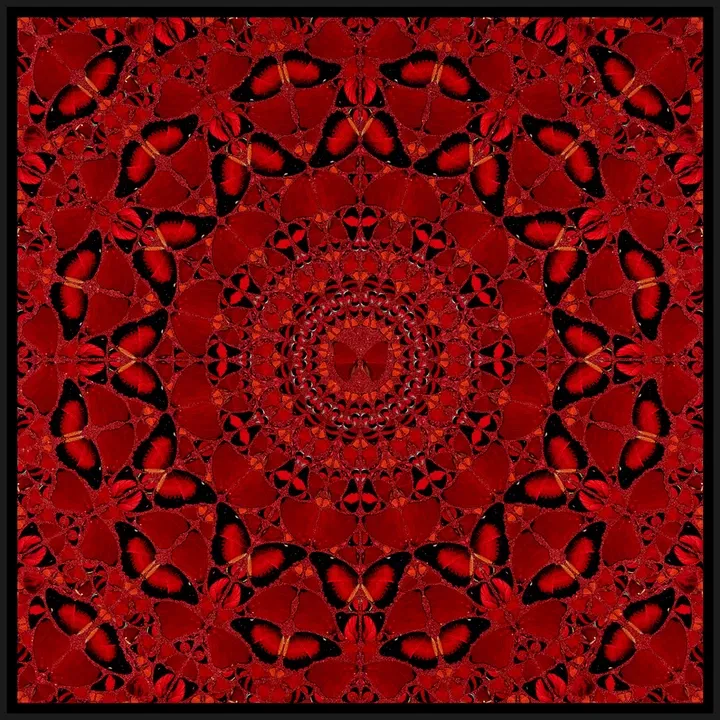
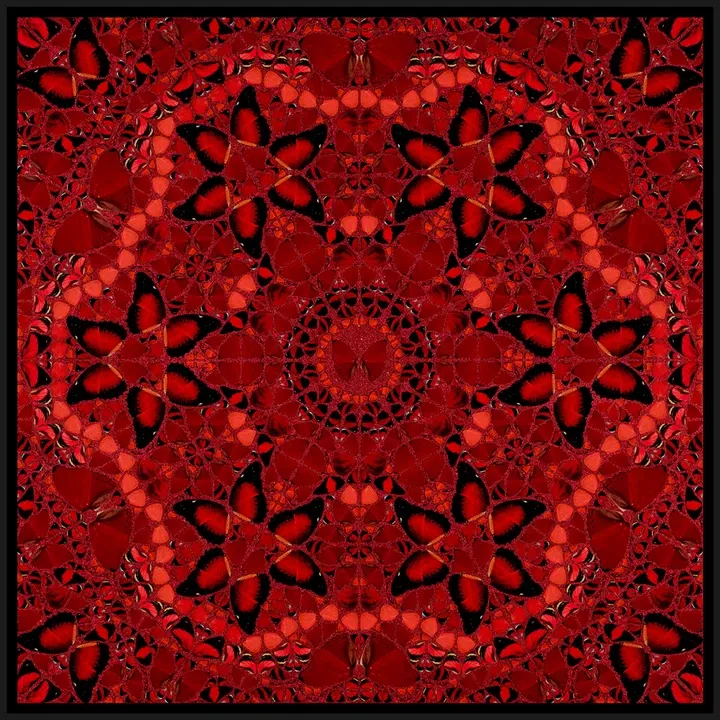
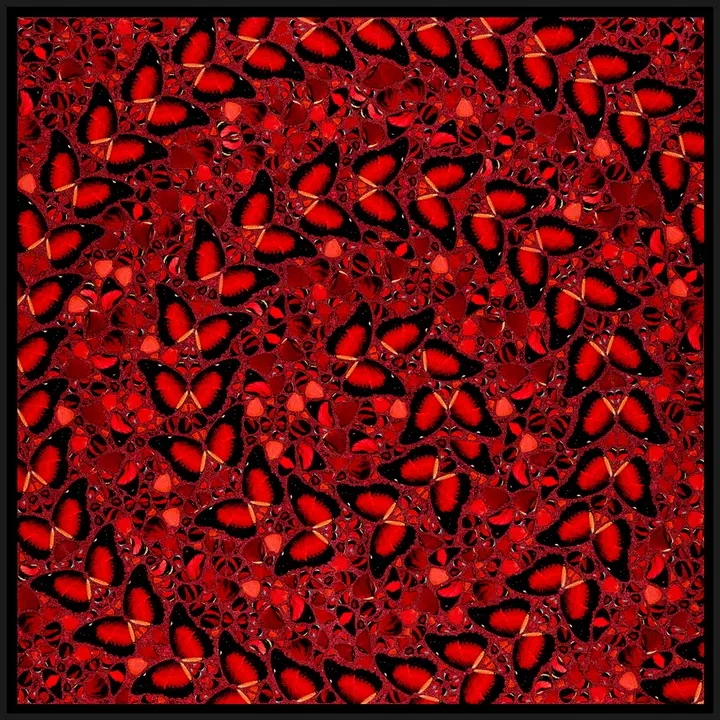
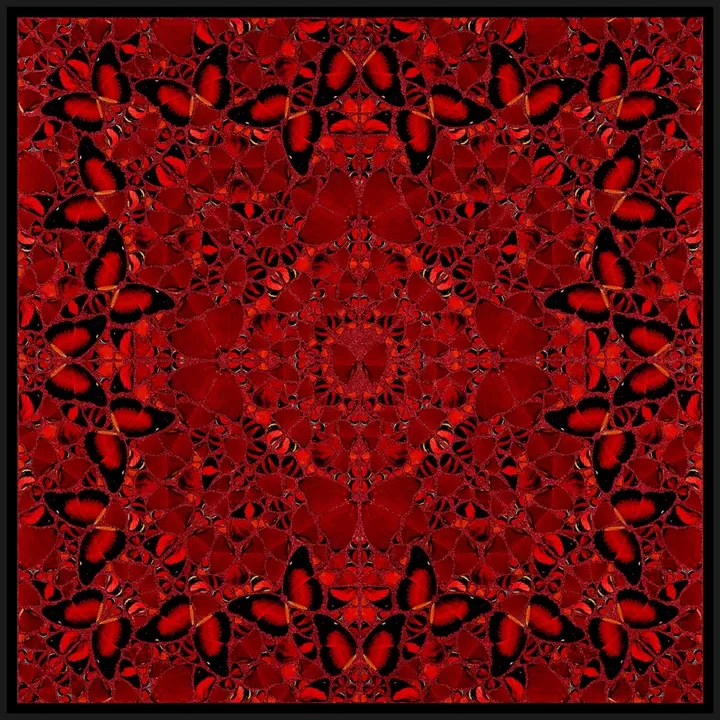
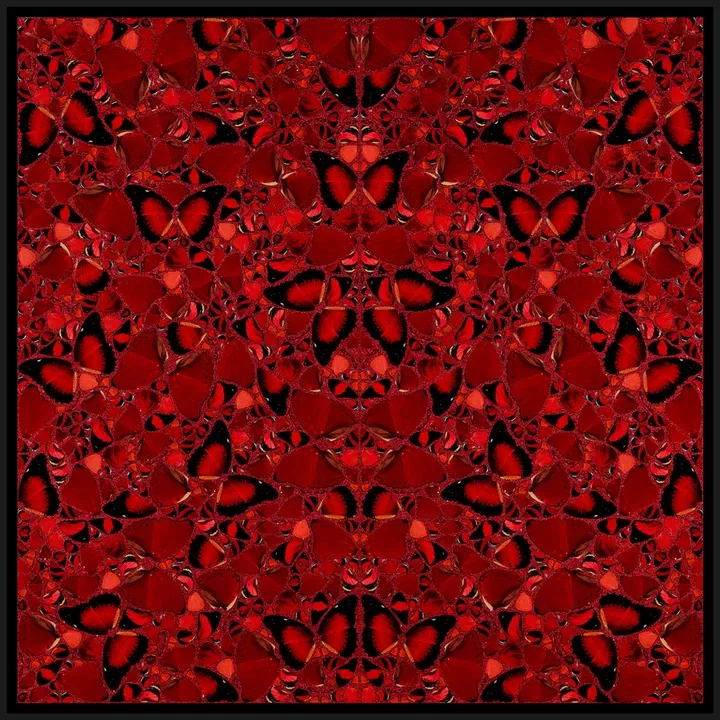
A recurring theme in Damien Hirst’s works, the butterfly, epitomises beauty and transience. In his most recent five-part series, the old master of the Young British Artists explores a topos that, above all, challenges our knowledge of Western history. The silk-screen works, printed with a fine lustre, are all named after female rulers whose respective provenances were Persian-Indian, Byzantine, Chinese, Japanese and Ethiopian history. Hirst pays tribute to these outstanding, though largely unknown queens: Nur Jahan, Theodora, Wu Zetian, Suiko, Taytu Betul not only by a dazzling work of art, but also with a distinctive pattern, which reveals itself to be a finely crafted mosaic composed of count-less butterfly wings. The form and appearance of the mosaic refer, in turn, to historical and biographical aspects of these regents. To appreciate the images in their full depth and significance, this encourages us, the viewers, to examine the lives and heritage of these remarkable women.
The Virtues
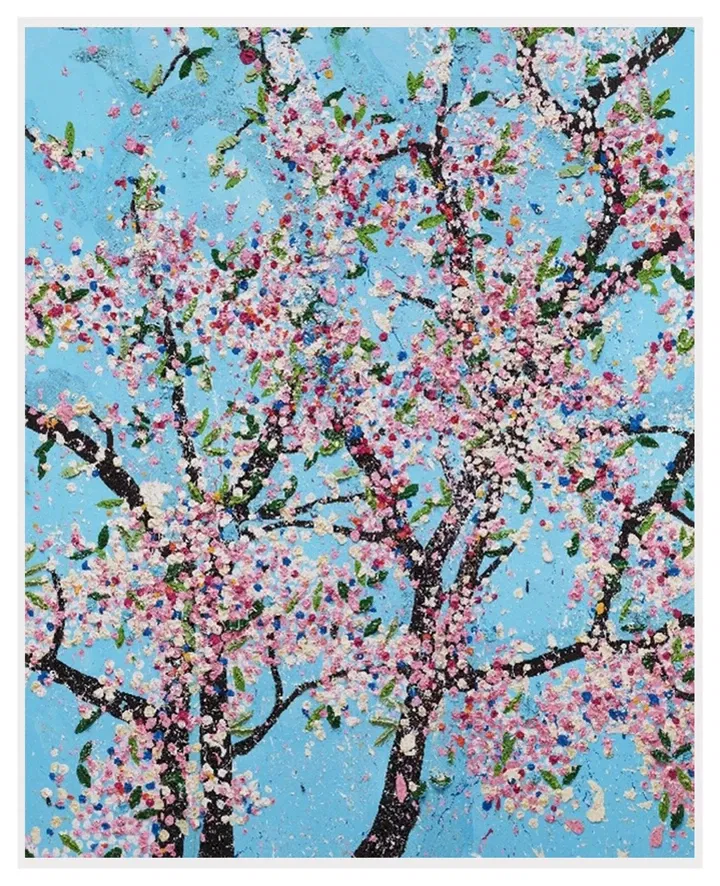
Founding member of the Young British Artists Damien Hirst proves that one way of remaining true to yourself is by reinventing yourself. With his large-format Cherry Blossoms, he fulfilled an old dream of his and his mother’s: Back when he submerged a tiger shark in formaldehyde, she implored him to at least once paint flowers. Three years ago, he did just that. Working alone and in seclusion, Hirst spent three years producing an inordinate number of paintings. In all versions, he applied enormous quantities of paint onto canvases arranged in parallel in his London studio. He painted and dripped, he flung paint, he approached the canvas in a state of intoxication and stepped back to inspect it – until his vision, expressed in paint, resembled a Japanese cherry blossom. So far, these works could be admired at the Fondation Cartier and the National Art Center Tokyo. Anyone familiar with Hirst knows that for him the cherry blossom is a symbol not just of beauty but also of ephemerality. In this way, Hirst has remained true to his most central theme.
About the Artist
At the beginning there was a dot. Circular, neither too large nor too small, unimposing, coloured. One dot, plain and simple. It stood on the wall of a warehouse in London, an area converted into an exhibition space. Other dots soon appeared around this dot, equidistant from one another, painted onto the wall. A square grid of coloured dots emerged. To prove how diverse such a grid of coloured dots could be, Damien Hirst painted a second next to it. They were called “Edge” and “Row”.
The effect was so effortlessly successful, the focus on a theme so profound. How can colours so concentrated, so bare, and yet so full of meaning, become art, become an image style? “Edge” and “Row” were both a product and the beginning of an artistic approach to colour that has been continually evolving since 1988.
Some of the grids remind us of medicines in the pharmaceutical industry. The soft pastel colours and uniform patterns of the coloured pills suggest a pain-free zone. The cryptic title given to the series by Hirst is also evocative of pharmaceutical ingredients. They have names that, were you to place them next to one another and read aloud, would sound like a poem in concrete prose: Mepromate Lepidine Histidyl - Abalone Acetone Powder.
The transferability of meaning and the transformation of content is very much in keeping with the style of the artist. One might recall the live tiger shark Hirst submerged in formalin in 1991. A silent killer of the deepest oceans, it looked out at the viewers from inside an enormous blue container, mouth wide open, teeth razor sharp. The threatening work was given the name “The physical impossibility of death in the mind of someone living”. Can anyone divide public opinion and whip the global art market into a frenzy in such a way? In 2007 he produced a human skull made from platinum and encrusted with 8601 pure diamonds, including a 52 carat diamond centrepiece mounted on the forehead. The skull was bought by an investment group for around $100 million. The plot thickened as we later learned that Hirst himself was a member of the group.
Hirst’s art is created to be ambivalent and revolves around a focal point in his thinking: “I’ve got an obsession with death … But I think it’s like a celebration of life rather than something morbid”. Whether preserving animals in formalin, creating kaleidoscopic images from butterflies, or covering skull x-rays with captivating colour mixtures, the young Tate Modern artist always manages to give death a smile.
Stephan Reisner
| 1965 | Born in Bristol, UK |
| 1986-1989 | Goldsmith College „Fine Arts“ |
| 1988 | Curator of the exhibition „Freeze“, Surrey Docks, London, UK |
| 1990 | Curator of the exhibition „Modern Medicine“, Building One, London, UK |
| 2007 | The artwork “For the Love of God” is sold for € 75 Million and is the most expensive work of contemporary art according to British media reports |
| Lives in Devon and has Studios in London, Gloucester and Devon, UK |
| 1995 Turner Prize |
| 2026 | Nothing Is True But Everything Is Possible, National Museum of Modern and Contemporary Art (MMCA), Seoul, South Korea |
| 2025 | Drawings, Albertina Modern, Vienna, Austria |
| 2024 | To Live Forever (For a While), Museo Jumex, Mexico City, Mexico |
| The Light That Shines, Château La Coste, Aix-en-Provence, France | |
| 2023-2024 | The Weight of Things, MUCA – Museum of Urban and Contemporary Art, Munich, Germany |
| 2023 | Where Land Meets the Sea, Phillips, London, UK |
| 2022 | The Currency, Newport Street Gallery, London, UK |
| Natural History, Gagosian, London, UK | |
| Cherry Blossoms, National Art Center, Tokyo, Japan | |
| Myths, Legends and Monsters, Gagosian, Gstaad, Switzerland | |
| Forgiving and Forgetting, Gagosian, New York, USA | |
| 2021 | Archaeology Now, Galleria Borghese, Rome, Italy |
| Cherry Blossoms, Fondation Cartier pour l’art contemporain, Paris, France | |
| Fact Paintings and Fact Sculptures, Gagosian, London, UK | |
| Cathedrals Built on Sand, Gagosian, Paris, France | |
| His Own Worst Enemy, White Cube, Hong Kong | |
| Forgiving and Forgetting, Gagosian, Rome, Italy | |
| 2020 | End of a Century, Newport Street Gallery, London, UK |
| 2019 | Mandalas, White Cube, London, UK |
| Damien Hirst, Yorkshire Sculpture Park / Yorkshire Sculpture International, Wakefield, UK | |
| 2018 | Damien Hirst at Houghton Hall, Houghton Hall, Norfolk, UK |
| Colour Space Paintings, Gagosian, New York, USA | |
| The Veil Paintings, Gagosian, Los Angeles, USA | |
| Damien Hirst, Galerie Bastian, Berlin, Germany | |
| 2017 | Treasures from the Wreck of the Unbelievable, Palazzo Grassi and Punta della Dogana, Pinault Collection, Venice, Italy |
| Visual Candy and Natural History, Gagosian, Hong Kong | |
| 2015 | Damien Hirst, Astrup Fearnley Museet, Oslo, Norway |
| 2014 | Black Scalpel Cityscapes, White Cube, São Paulo, Brazil |
| Schizophrenogenesis, Paul Stolper Gallery, London, UK | |
| 2013 | Freedom Not Genius, Multimedia Art Museum / Moscow House of Photography, Moscow, Russia |
| Entomology Cabinets and Paintings, Scalpel Blade Paintings and Colour Charts, White Cube, Hong Kong | |
| 2012 | Damien Hirst, Tate Modern, London, UK |
| The Complete Spot Paintings 1986–2011, Gagosian, international venues | |
| Two Weeks One Summer, White Cube, London, UK | |
| 2010 | Cornucopia, Musée Océanographique de Monaco, Monaco |
| For the Love of God, Palazzo Vecchio, Florence, Italy | |
| 2009 | Nothing Matters, White Cube, London, UK |
| 2008 | Requiem, PinchukArtCentre, Kyiv, Ukraine |
| For the Love of God, Rijksmuseum, Amsterdam, Netherlands | |
| 2007 | Beyond Belief, White Cube, London, UK |
| 2006 | The Death of God – Towards a Better Understanding of a Life Without God Aboard the Ship of Fools, Galería Hilario Galguera, Mexico City, Mexico |
| 2005 | Damien Hirst, Astrup Fearnley Museet, Oslo, Norway |
| 2004 | The Agony and the Ecstasy: Selected Works from 1989–2004, Museo Archeologico Nazionale di Napoli, Naples, Italy |
| 2003 | Romance in the Age of Uncertainty, White Cube, London, UK |
| 2026–2027 | The 90s: Art and Fashion, Tate Britain, London, UK |
| 2026 | ANIMALIA. Of Animals and Humans, Heidi Horten Collection, Vienna, Austria |
| 2025–2026 | Triple Trouble: Shepard Fairey, Damien Hirst, Invader, Newport Street Gallery, London, UK |
| 2020 | Colección Jumex: On the Razor’s Edge, Museo Jumex, Mexico City, Mexico |
| Love, Life, Death, and Desire, Yale Center for British Art, New Haven, USA | |
| 2019 | Objects of Wonder: British Sculpture from the Tate Collection 1950s–Present, PalaisPopulaire, Berlin, Germany |
| Yorkshire Sculpture International 2019, Leeds/Wakefield, UK | |
| 2018 | The Last Image. Photography and Death, C/O Berlin, Berlin, Germany |
| 2017 | Colori. The Emotions of Color in Art, Castello di Rivoli, Turin, Italy |
| 2016 | Creature, The Broad, Los Angeles, USA |
| Sculpture on the Move 1946–2016, Kunstmuseum Basel, Basel, Switzerland | |
| LIFE ITSELF, Moderna Museet, Stockholm, Sweden | |
| 2015 | Magnificent Obsessions: The Artist as Collector, Barbican Art Gallery, London, UK |
| What We Call Love: From Surrealism to Now, Irish Museum of Modern Art, Dublin, Ireland | |
| 2014 | 14 Rooms, Art Basel, Basel, Switzerland |
| 2012 | Regarding Warhol: Sixty Artists, Fifty Years, The Metropolitan Museum of Art, New York, USA |
| British Design 1948–2012: Innovation in the Modern Age, Victoria and Albert Museum, London, UK | |
| 12 Rooms, Museum Folkwang, Essen, Germany | |
| 2011 | Yokohama Triennale, Yokohama Museum of Art, Yokohama, Japan |
| The Luminous Interval, Guggenheim Museum Bilbao, Bilbao, Spain | |
| 2010 | C’est la vie: Vanités de Caravage à Damien Hirst, Musée Maillol, Paris, France |
| 2009–2010 | Pop Life: Art in a Material World, Tate Modern, London / Hamburger Kunsthalle, Hamburg, Germany |
| 2009 | Medicine and Art: Imagining a Future for Life and Love, Mori Art Museum, Tokyo, Japan |
| 2008 | Statuephilia, British Museum, London, UK |
| Color Chart: Reinventing Color, 1950 to Today, Museum of Modern Art (MoMA), New York, USA | |
| Blood on Paper: The Art of the Book, Victoria and Albert Museum, London, UK | |
| 2007 | Turner Prize: A Retrospective, Tate Britain, London, UK |
| RE-OBJECT, Kunsthaus Bregenz, Bregenz, Austria | |
| 2006 | The François Pinault Collection: A Post-Pop Selection, Palazzo Grassi, Venice, Italy |
| Into Me / Out of Me, MoMA PS1, New York, USA | |
| 2005 | Contemporary Voices: Works from the UBS Art Collection, Museum of Modern Art (MoMA), New York, USA |
| Prague Biennale 2, Prague, Czech Republic | |
| 2004 | In-A-Gadda-Da-Vida, Tate Britain, London, UK |
| Monument to Now, DESTE Foundation for Contemporary Art, Athens, Greece | |
| 2003 | Dreams and Conflicts: The Dictatorship of the Viewer, 50th Venice Biennale, Venice, Italy |
| 1997 | Sensation: Young British Artists from the Saatchi Collection, Royal Academy of Arts, London, UK |
| 1988 | Freeze, Surrey Docks, London, UK |